

Trial Lawyers Relentlessly Pursuing Justice


Los Angeles Murphy Conservatorship Attorneys
Aggressively Protecting Your Best Interests
At Lessem, Newstat & Tooson, LLP, we have been able to help hundreds of clients with mental health issues who have been criminally charged throughout Southern California. Without strong legal defense on your side you stand to lose a lot. This is true whether you are in the pre-filing stages of a mental health case, you are in the middle of a trial being held in Department 95, or you are stuck in the interim period between a civil commitment holding and a trial date.
We know how crucial it is to have aggressive legal defense by your side at every step of the way, and we are here to make sure that your legal needs are met at all times.
Don’t wait to contact a Southern California Murphy Conservatorship attorney from our firm today.
What Is a Murphy Conservatorship?
A Murphy conservatorship is a specialized civil commitment authorized under the Lanterman-Petris-Short (LPS) Act. It applies to a narrow group of people: those charged with certain serious felonies who have been found mentally incompetent to stand trial under Penal Code section 1370 and who cannot be restored to competency within the legal time limits.
Named after the legislator who sponsored the relevant statutory language, a Murphy conservatorship allows the court to appoint a conservator (often the county Public Guardian) with authority to place the individual in a locked psychiatric facility, frequently a state hospital, and to consent to mental health treatment on their behalf. The legal foundation is Welfare and Institutions Code section 5008(h)(1)(B). Unlike ordinary mental health holds, this conservatorship is designed both to provide treatment and to protect public safety when a person remains dangerous due to a mental disorder and faces pending charges involving death, great bodily harm, or a serious threat to another person’s physical well-being.
The conservatorship lasts one year, and it can be renewed annually if the person continues to meet the strict legal criteria.
How Do Murphy Conservatorships Differ from Standard LPS Conservatorships?
Standard LPS conservatorships and Murphy conservatorships both fall under the LPS Act, but they rest on different definitions of “gravely disabled” and serve different primary purposes.
A standard LPS conservatorship (Welfare and Institutions Code § 5008(h)(1)(A)) focuses on whether a person, as a result of a mental health disorder, is unable to provide for their basic personal needs for food, clothing, or shelter and is unwilling or unable to accept voluntary treatment. The central concern is the individual’s inability to care for themselves.
A Murphy conservatorship uses a different definition. It does not require proof that the person cannot meet basic needs. Instead, the court must find all of the following:
- The person has been found incompetent to stand trial under Penal Code section 1370.
- The pending charges involve a felony that includes death, great bodily harm, or a serious threat to the physical well-being of another person, and those charges have not been dismissed after a finding of probable cause.
- As a result of a mental disorder, the person remains unable to understand the nature of the criminal proceedings or assist counsel in a rational manner.
- The person currently represents a substantial danger of physical harm to others by reason of a mental disease, defect, or disorder.
Because of the danger requirement and the connection to serious criminal charges, Murphy conservatees are far more likely to be placed in highly secure facilities such as state hospitals. Standard LPS conservatorships place greater emphasis on the least restrictive appropriate placement, which can sometimes include community-based settings.
Who Is Eligible for Murphy Conservatorship?
The criteria for establishing Murphy Conservatorship for an individual will require showing:
- The individual is not competent to stand trial and has outstanding felony charges involving causing great physical injury or death of another person
- The individual is gravely disabled with a mental health disorder
- The individual poses a threat to self and/or others
Mental incompetency, as determined under Section 1370 of the Penal Code, will call for the civil commitment of a defendant who has been accused of a violent criminal offense in Southern California. There is no way to tell when – if ever – a person who suffers from insanity will regain their sense of mental well-being. Therefore, sanity hearings are scheduled to establish whether or not an accused individual has the mental stability required to withstand trial.
There is no telling how long this type of civil commitment could continue to be extended for; therefore, finding a mental health lawyer on whom you can rely to protect your mental health disability rights could be vital to your future.
How Is a Murphy Conservatorship Established?
The process usually begins in criminal court. When a defendant is found incompetent to stand trial, criminal proceedings are suspended, and the person is committed for treatment aimed at restoring competency. Under Penal Code section 1370, that commitment is limited (generally to a maximum of three years or the maximum term of imprisonment for the most serious charged offense, whichever is shorter).
If the person has not regained competency by the end of that period, or if treating professionals conclude there is no substantial likelihood of restoration in the foreseeable future, the criminal court may order the county Public Guardian to investigate whether a Murphy conservatorship is appropriate. The Public Guardian prepares an investigation report. If the Public Guardian recommends conservatorship, a petition is filed in the superior court (typically the mental health court).
At the hearing, the petitioner must prove the statutory criteria beyond a reasonable doubt; the same high standard used in criminal trials. The proposed conservatee has the right to appointed counsel and the right to demand a jury trial on the issue of whether they are gravely disabled under the Murphy definition. If the court or jury finds the criteria are met, a conservator is appointed, and the person is placed according to the conservator’s recommendation, subject to court oversight.
What Happens When a Person Is Placed Under Murphy Conservatorship?
The conservatorship will be put in place to address the fact that the defendant remains dangerous and unable to stand trial in a sane manner. As such, a person placed under Murphy Conservatorship will remain under civil commitment until it can be proven that they are no longer dangerous or incompetent.
During the conservatorship, the individual will receive mental health treatment at a facility. Annual extensions of a Murphy appointment can be made if the individual remains dangerous and/or incompetent to attend to their own affairs.
Rights of the Conservatee and Family Members
Even under a Murphy conservatorship, the conservatee retains important rights. These include the right to legal counsel, the right to a jury trial when demanding one on the issue of grave disability, the right to petition for a rehearing, and the right to the least restrictive placement consistent with the need for treatment and public safety.
Specific personal rights, such as receiving visitors, making and receiving phone calls and mail, and refusing certain treatments, are not automatically lost. The court must make specific findings before limiting those rights.
Family members are not parties to the conservatorship in the same way the conservatee is, but they often play a critical practical role. They can provide information to the court and counsel, request placement reviews, and support efforts to show that the conservatee no longer meets the danger criterion. Families should understand that the Public Guardian, not family members, typically serves as conservator in Murphy cases because of the public-safety component.
How to Contest or Modify a Murphy Conservatorship
A Murphy conservatorship is not permanent.
Several avenues exist to challenge or end it:
- Rehearing: The conservatee may petition for a rehearing on whether they remain gravely disabled. There is generally a six-month waiting period between petitions.
- Opposition to reappointment: Because the conservatorship expires after one year, the conservator must petition for reappointment. The conservatee can contest the petition and demand a new hearing or jury trial.
- Petition to terminate: Interested parties, including the conservatee, may petition the court to terminate the conservatorship if the person no longer meets the criteria.
- Writ of habeas corpus: After exhausting other remedies, a conservatee may file a petition for writ of habeas corpus challenging the legality of the commitment or conditions of confinement.
In Murphy cases, the decisive issue is often whether the person continues to represent a substantial danger of physical harm to others. Demonstrating clinical improvement, a realistic community safety plan, and the absence of recent dangerous behavior is essential.
Impact on Criminal Charges and Competency Restoration
A Murphy conservatorship does not resolve the underlying criminal case. The criminal charges remain pending, and the proceedings stay suspended. Courts and prosecutors generally will not dismiss the charges while a Murphy conservatorship is in place, because the existence of the unresolved serious felony charges is one of the statutory prerequisites for the conservatorship itself.
If the conservatee later regains competency, the criminal case can resume. If the conservatorship ends without restoration of competency, the criminal court may then consider dismissal of the charges under Penal Code section 1385 or related authority. Until that point, the person remains subject to both the civil conservatorship and the unresolved criminal accusations. This dual exposure is one of the reasons specialized legal representation is critical.
Why You Need an Experienced Attorney
Murphy conservatorship cases sit at the intersection of criminal procedure, mental health law, and civil commitment. The Public Guardian, district attorney’s office, treating psychiatrists, and mental health court all play roles, and the legal standards are exacting.
An experienced attorney can:
- Challenge the evidence of current dangerousness and unrestorability.
- Protect the conservatee’s right to a jury trial and to the least restrictive placement.
- Coordinate strategy between the suspended criminal case and the civil conservatorship proceedings.
- Pursue rehearings, oppose reappointments, and seek termination when clinical improvement occurs.
- Advocate for the family’s meaningful involvement and for treatment focused on eventual restoration of rights and, when possible, competency.
The difference between a carefully contested case and an uncontested one can mean the difference between indefinite secure confinement and a path toward less restrictive treatment or eventual resolution of the criminal charges.
If you or a loved one is facing a potential Murphy conservatorship, or is already under one, timely legal counsel is essential. The attorneys at Lessem, Newstat & Tooson, LLP have substantial experience navigating these complex proceedings in Southern California courts and are prepared to protect the rights of the conservatee and the family at every stage.
Contact Our Firm Today
"*" indicates required fields






Supportive with Clients. Aggressive in Court.
Navigating the legal system can be complicated. To maximize your chance of securing the best outcome possible, it is essential that you reach out to us without delay. When you hire our firm, we will work quickly to gather every detail, examine every piece of evidence, and build a strong case.
We will not hesitate to go toe-to-toe in trial with an insurance company, corporation, prosecutor, or law enforcement officer. Regardless of the type of situation you are involved in, rest assured that we will do everything we can to protect your rights and help you secure the most favorable result possible.
Meet the Lawyers Fighting for You
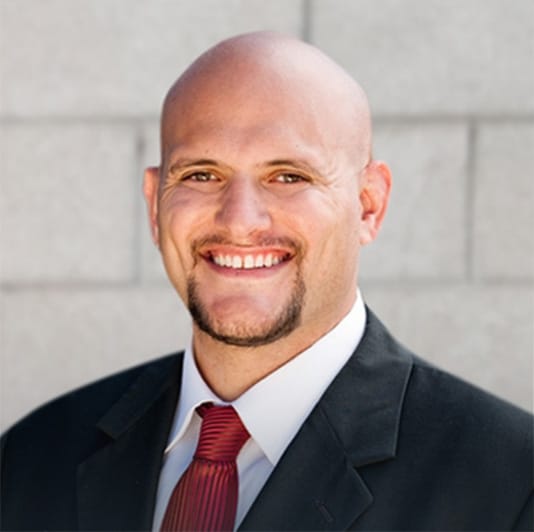
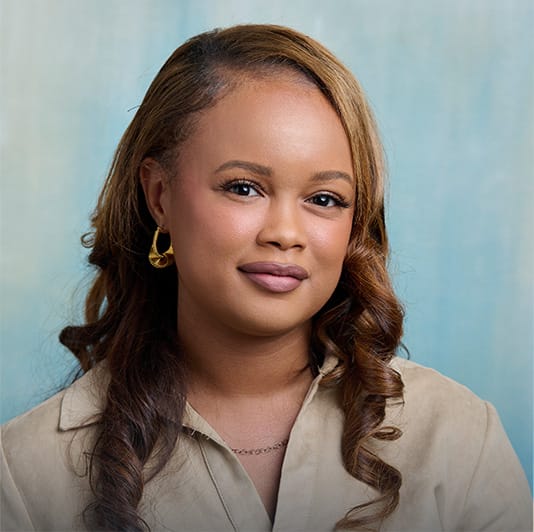
The Lessem, Newstat & Tooson Team





Our Clients Are Our Focus.
When facing complex legal matters, it is not uncommon to encounter an issue that needs immediate attention from your team.
For this reason, we are available to assist our clients 24 hours a day, seven days a week, to ensure any questions or concerns you may have will be addressed immediately. With around the clock service and multiple office locations, clients throughout Southern California can be confident knowing our counsel is available to them whenever and wherever they need it.


Make Your Future
Our Business
"*" indicates required fields